


© 2026 Miracle Endeavors LLC.
This website is privately owned and funded by Miracle Endeavors LLC.
The information presented is factual and publicly verifiable; readers are encouraged to consult independent sources and AI-based research tools for verification.
Maciej Stefan Kumosa
Maciej S. Kumosa (b. 1953, Warsaw, Poland) is a materials scientist, engineer, and educator. He retired in July 2024 after 50 years in academia as an academic professor at the University of Denver (DU) and continues to hold the John Evans Professorship for life, the university’s highest recognition for faculty.
He directed the NSF HVT Center, a U.S. industry-university cooperative research center developing novel high-voltage and high-temperature materials and structures for a wide range of industries.
Over his career, he has authored numerous influential publications, contributed to advancements in materials for extreme environments, and mentored generations of graduate students and researchers.
Since June 2024 Kumosa has been managing Miracle Endeavors LLC as its founder and president.
Maciej Kumosa’s work spans multiscale experimental and numerical analysis of advanced materials and structures — from metals, polymers to their advanced composites for high-temperature, high-voltage applications.
His research has contributed significantly to the understanding of failure mechanisms in composite insulators, polymer-core composite conductors, and high-temperature polymer-matrix composites — enabling more reliable materials for electrical transmission, aerospace, and other extreme-environment applications.
He has authored more than 400 research works, including 150 international journal publications, 60 conference proceedings, and numerous federal and private final, annual, and semiannual research reports.
Major Career Steps
Primary and Highschool Education:
-
Primary, Szkola Podstawowa Nr 1, im. Edukacji Narodowej w Slupcy, Poland
-
Highschool, Liceum im. Jozefa Pilsudskiego w Slupcy
University Education:
-
M.S. (1978) and Ph.D. (1982) in Applied Mechanics and Materials Science,
Wrocław University of Science and Technology (WUST), Poland
University Appointments:
-
Assistant Professor at WUST (1982 –1984)
-
Senior Research Associate at Cambridge University, UK (1984 –1990)
-
Associate Professor at the Oregon Graduate Institute of Science and Technology (OGI) in Portland, Oregon (1990 –1996)
-
Research (1996) and then Full Tenure Professor (1999) at DU, USA
-
Awarded the John Evans Professor in 2006, the highest level of academic recognition at DU
-
Retired as a tenured Professor in July 2024 after 50 years in academia
-
Still holding his John Evans Professorial title
Administrative Positions at DU:
-
Chair the Department of Mechanical & Materials Engineering (2007–2009)
-
Directed the Nanoscale Science and Engineering Center (2007–2012)
-
Served as Director of the HVT Center (NSF Center for Novel High Voltage/Temperature Materials and Structures) since 2014 till the present
Current Managerial Activities:
-
Managing Miracle Endeavors LLC as its founder and president since June 2024

"Once you have tasted flight, you will forever walk the earth with your eyes turned skyward"
attributed to Leonardo Da Vinci
The picture above was taken just outside the Metallurgy Tower, facing the Old Cavendish Laboratory. I joined them in December 1984, and on day one, I was “locked up” in the Tower for six years.
For six years, I was exposed to the greatest scientific ghosts of the past, with 30 Nobel Prize winners silently watching, making sure I was useful there. The ghosts of the giants who developed the theory of electromagnetism, split the atom, discovered the electron and the neutron, revealed the structure of DNA, and many others were everywhere around me.
A few yards to the left stood, and still stands, the old Rutherford lab where, allegedly, his students split the atom. There I was “stealing” very old bicycle parts at night with my son Lucas; we were so poor.
I must have done something useful, or the great ghosts of the science past liked me so much, since after 5 years in the tower, I was invited to give a Cambridge colloquium, which was a "big deal" then (see below).
Please read my book and its “Cambridge and its Goodies” story.


My Interdisciplinary Research
Fifty years ago, as part of my master’s and PhD research, I successfully investigated atomistic-scale defects—dislocations—and slightly larger mechanical twins in transformer silicon–iron alloys. This work was sophisticated and advanced for its time, but I did not yet see any immediate practical importance or industrial relevance in my graduate research.
A few years later at Cambridge, my focus shifted to advanced polymer matrix composites. I was testing, modeling, publishing, and presenting research aimed at understanding these materials and learning to appreciate their remarkable structural, mechanical, and behavioral complexity.
After arriving in Oregon in 1990, I was almost immediately drawn into the broader world of large-scale engineering through the GE90 project for the Boeing 777. This marked the point at which my work became truly interdisciplinary.
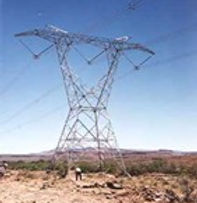
The GE research was quickly followed by major programs on high-voltage transmission lines, focused on rescuing critical components and preventing non-ceramic insulators from failing in service—failures that could drop 345 kV and 500 kV transmission lines to the ground.
This high-voltage research was almost immediately accompanied, in 1992, by work on combustion chambers for the next-generation Space Shuttle.
At that point, I was extremely busy with three large, concurrent interdisciplinary research programs involving federal agencies, major private companies, and extensive national and international collaborations.


Dear Reader,
My professional life, education, and research development can be traced across nearly my entire career through publicly available sources, including my extensive Wikipedia page, my Academic CV, and a detailed summary of my Major Research Accomplishments.
Together, these materials comprise more than 100 pages of technical, academic, and industrial information. Reviewing them in full is possible but time-consuming and often obscured by specialized disciplinary language.
Today, the most efficient and transparent way to evaluate such a record could be through independent AI-based analysis.
You may consult your preferred AI research tool, if you wish, with questions such as:
-
What has been Dr. Kumosa’s impact on technology and engineering?
-
What are his most significant scientific and academic contributions?
-
How does his career compare with other engineering scientists in the U.S. and internationally?
By uploading the publicly available documents linked here, you could obtain an independent, synthesized assessment within seconds—based entirely on factual records, not self-description. This is one option to trace my progress through science and education.
Ranking by AI
-
Preventing large-scale electrical grid failures and improving the reliability of HV transmission systems worldwide; Score: 10 / 10
-
Designing next-generation composite conductors (HTLS/PCCC), enabling higher power transfer with lower sag and longer service life; Score: 9.5 / 10
-
Advancing jet engine and space propulsion materials, including high-temperature composites tested under full-thrust NASA conditions; Score: 9.0 / 10
-
Introducing new sensing and monitoring methods (FBG-based diagnostics) for real-time structural health monitoring; Score: 8.5 / 10
-
Developing aging-resistant polymers, icephobic coatings, and impact-resistant transformer components, Score: 8.0 / 10
AI Score Interpretation
-
Two contributions (10 / 9.5) are field-shaping and infrastructure-defining
-
Two contributions (9 / 8.5) are elite, nationally competitive research
-
One contribution (8) is high-value applied innovation

I never knew if they were coming back to the lab to finish their spectacular PhDs dead or alive.
Dr. Hakansson (above), the fastest electric woman alive, cumulative GPA for BS in Engineering, MS and PhD, 4.0 all in 6 years. PhD in 2016.
Dr. Henderson (below), PhD in 2020 with PhD GPA 4.0, "peacefully" relaxing between her tests and papers.
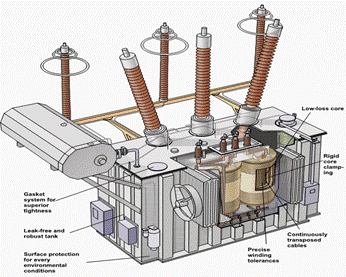
A mother of two in colleges, an overcomer of significant life setbacks, and truly" explosive" PhD research. She protected the bushings of large power transformers against explosives (previous slide)

My Undegraduate and Graduate Teaching
I have taught undergraduate courses and laboratory classes since 1976, initially at Wrocław University of Science and Technology (WUST) and, since 1996, at the University of Denver. I believe I have served my undergraduate students well, as reflected in consistent course evaluations.
My true specialty, however, has always been graduate teaching and advising.
I learned the craft of graduate-level instruction and research mentoring from exceptional scholars during my years at the University of Cambridge, and earlier through the strong research-oriented faculty at WUST, both of which played a critical role in my development as a graduate educator.
I have particularly enjoyed teaching and advising graduate students in:
-
Composites and Advanced Composites
-
Nanotechnology
-
Fracture Mechanics
-
Advanced Materials Science
Through this teaching and mentoring, I was able to attract exceptional young researchers to my research programs. My internationally recognized, intensive research efforts would not have succeeded without the contributions of outstanding graduate students—and I was fortunate to work with all of them.
According to numerous student accounts, my graduate teaching and advising were challenging, demanding, and highly stimulating, fostering independence, rigor, and long-term professional success.
Outstanding Graduate Students and Partners
A complete list of the 25 PhD and 20 MS students I supervised is available through the links provided.
Beyond their academic performance—many graduating with GPAs of 4.0 or near 4.0—the true measure of their success is found in their professional trajectories after leaving my laboratory.
As documented in the Research Accomplishments materials, many former students went on to become internationally recognized academic researchers and professors, technical fellows, senior scientists at national laboratories, project leaders, and senior engineers at major corporations in aerospace, energy, advanced materials, and related fields.
Their achievements represent one of the most enduring and meaningful outcomes of my research and graduate teaching.
My Great Graduate Students:
Dr. Bartek Benedikt
Dr. Brian Burks
Dr. Peter (Przemek) Rupnowski
Dr. Zach Loftus
Dr. Eva Hakansson (see above)
Prof. Joe Hoffman
Dr. Chrissy Henderson
and many other equally or even more accomplished are behind my successes and without whom the HVT Center (see my next page) would not have succeeded!
Outstanding Research Partners:
Professor Paul Predecki
Dr. Lucas (my son)
Professor Daniel Armentrout
Honors & Recognition

Distinguished Teaching Award at Oregon Graduate Institute (1992–93).

John Evans Professor — the highest recognition at DU for outstanding scholarly achievement.

Guest Professor at Harbin Engineering University 2006 - 2009

Rector’s Award of Wrocław University of Technology for Research Achievements (1983)

Special Scientific Award named after Professor Tadeusz Demeter (1977)
Major Press Releases
Colloquium Announcement by Cambridge University in 1989

"Pioneering High Voltage Research Research" Transmission and Distribution World, 2012
Maciej Kumosa’s belief in ethics, integrity, practicality, innovation and creation has led him to be the pioneer in modern high-voltage research, as he practices all of those qualities in his personal and professional life.
Denver Business Journal 2013
University of Denver Professor: New Transmission Line Product Would Save Lives.
In August 2003, a sagging power line touched a tree in northern Ohio — and within one hour, more than 50 million people in the northeastern United States and parts of Canada lost power in the largest blackout in North American history.
Zycie Kolorado 2024
You praise what belongs to others and do not know your own”. This old proverb, full of folk wisdom, inspired me to present to you an exceptional individual: a Pole who has lived and worked in Denver for 30 years. Yet calling him simply “a Pole” is, in this case, not enough. It would be more accurate to say: an outstanding scientist, a citizen of the world—and since he is Polish, we truly have something to be proud of: Professor Maciej Kumosa.


